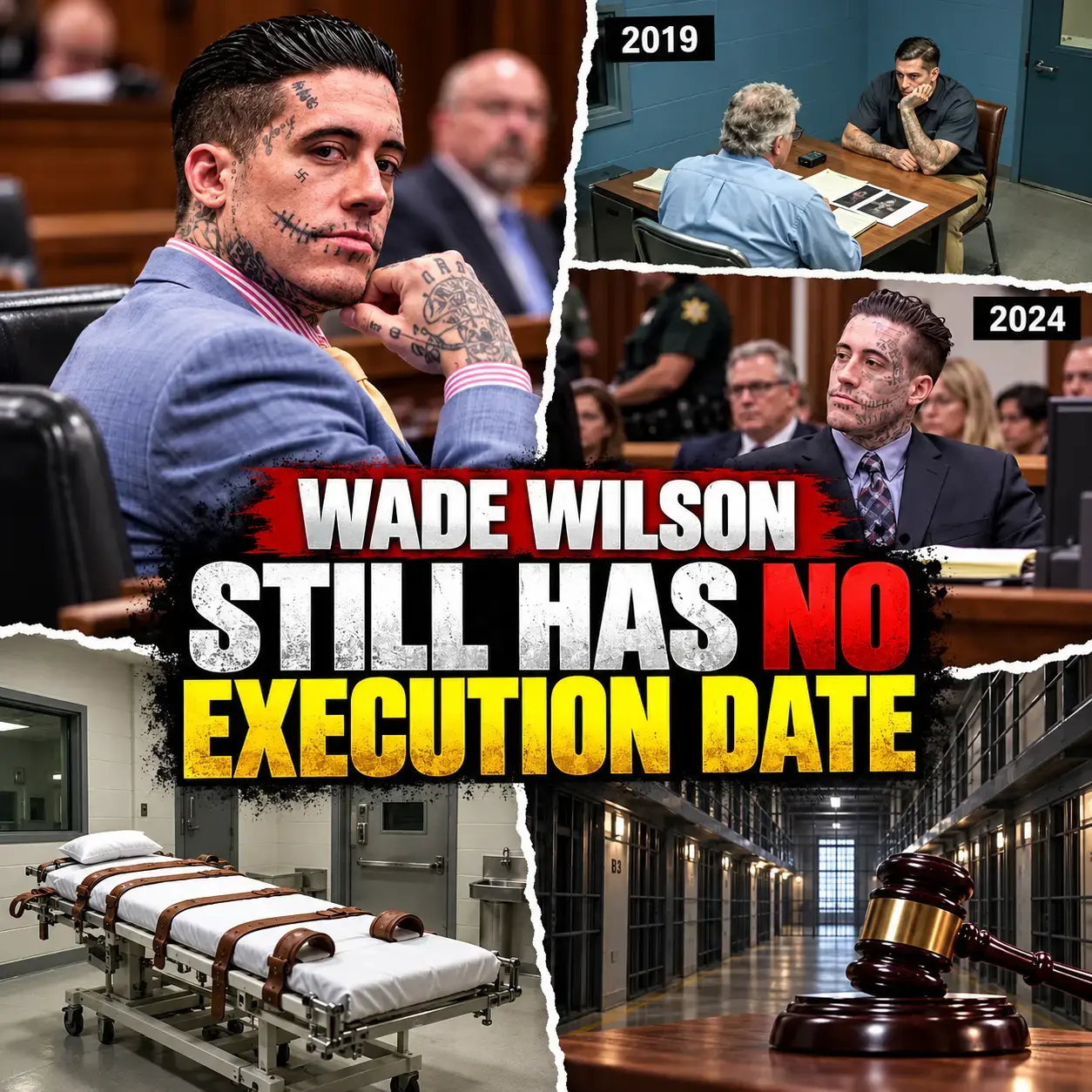
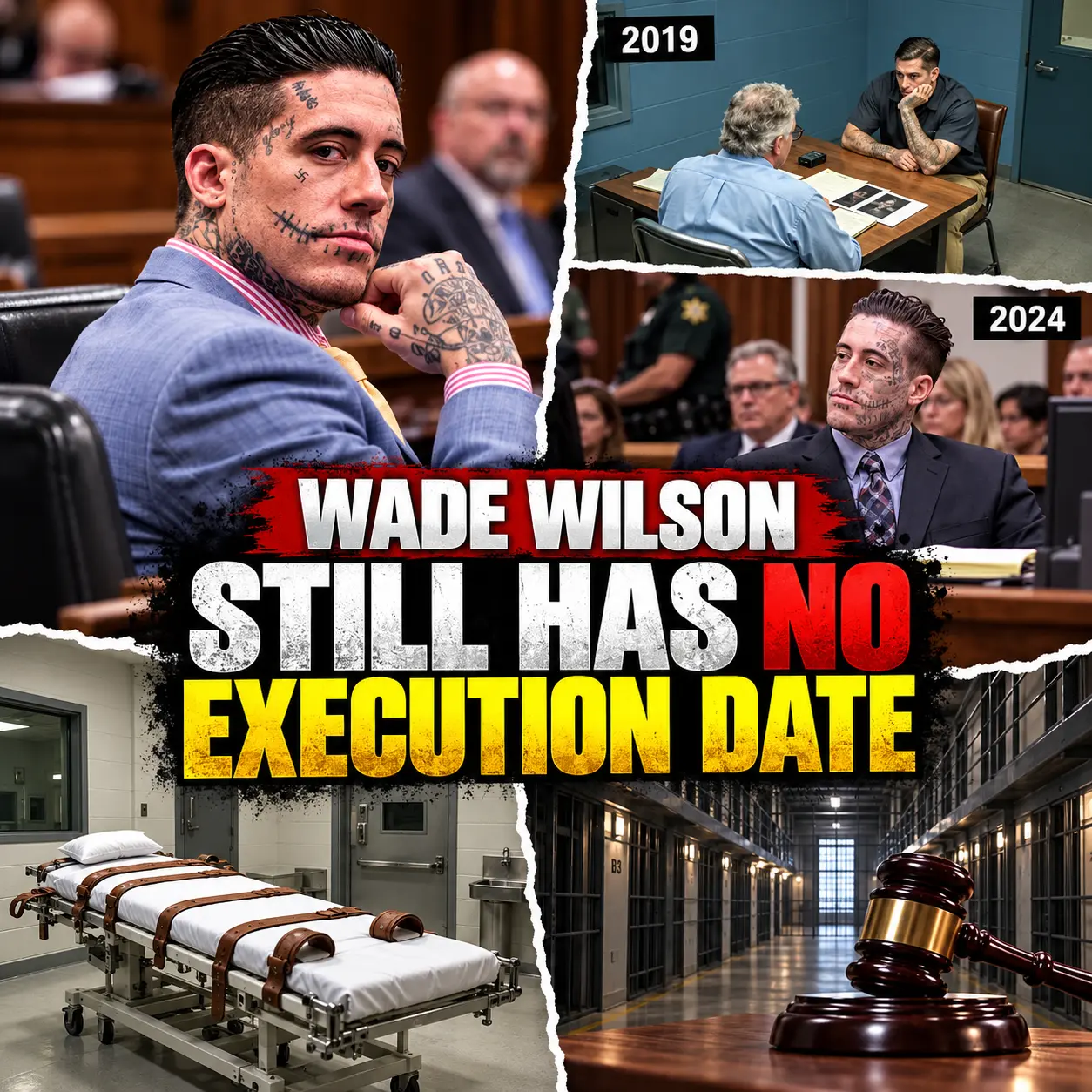
Wade Wilson has received two death sentences, yet no publicly announced execution date accompanies those judgments. The distinction reflects Florida's complicated legal process, not a reversal of his criminal convictions.
Wilson was convicted of murdering Kristine Melton and Diane Ruiz in Cape Coral during October 2019. A Florida judge imposed two death sentences in August 2024 following separate jury recommendations.
The killings devastated two grieving families and eventually generated intense public attention. Their names remain essential to understanding the case, even as subsequent reporting concentrates heavily on Wilson's legal future.
A death sentence establishes the punishment imposed by the trial court. An execution date identifies when the state intends to carry out that punishment, following additional legal and administrative steps.
Those steps can involve multiple courts, lengthy written submissions, hearings, and challenges. In Florida, a capital defendant receives mandatory review by the state's highest court before the process advances further.
Wilson's direct appeal bears case number SC2024-1345 in the Florida Supreme Court. Publicly reported docket information has continued to describe the appeal as open rather than finally resolved by judgment.
The court heard oral arguments on February 5, 2026. The hearing allowed attorneys to address legal questions arising from the convictions and sentences, but it was not an execution proceeding.
Oral argument does not itself resolve an appeal. Judges may examine the briefs, study precedent, confer with colleagues, and prepare an opinion before announcing their decision through official court records.
The docket information cited in recent coverage identifies a May 7, 2026, order permitting one attorney to withdraw as co-counsel. That docket entry concerns legal representation, not an execution date.
A change involving defense counsel does not mean the appellate court has affirmed or overturned the sentences. It also does not substitute for the court's eventual decision on substantive claims.
The principal question remains whether the death sentences survive the pending legal challenges. Until the court acts, predictions about later stages should be presented as possibilities rather than confirmed developments.
Wilson's case raises questions about Florida's current capital sentencing framework. In 2023, the state adopted a law allowing death recommendations when at least eight of twelve jurors support that punishment.
His jurors recommended death by votes of nine to three and ten to two. Neither recommendation was unanimous, but both exceeded the eight-vote minimum required under the amended Florida statute.
That difference matters because the crimes occurred in 2019, before Florida changed its sentencing threshold. The defense has challenged aspects of applying the newer sentencing framework to Wilson's criminal proceedings.
Florida has defended the constitutionality of its capital sentencing rules. State courts have considered related challenges, and Wilson's attorneys have sought to preserve federal constitutional questions for possible additional review.
Preserving a constitutional argument means ensuring that an objection remains available for consideration later. It does not guarantee a ruling, another hearing, or acceptance by the United States Supreme Court.
During February's hearing, defense attorney Michael Ufferman indicated that issues were being maintained for possible federal review. That statement described a potential strategy rather than a pending Supreme Court decision.
If the Florida Supreme Court ultimately rules against Wilson, his attorneys may examine whether to seek review in Washington. Such review requires filing a separate petition under applicable procedural rules.
The federal Supreme Court chooses which petitions to consider. A request for review does not automatically result in oral argument, a stay, or a decision addressing every constitutional question raised.
Even a refusal to hear a petition has a limited meaning. It generally leaves the lower court judgment standing without necessarily expressly endorsing every reason offered by the judges below.
Direct appeal is only one part of capital litigation. Afterward, eligible defendants may pursue additional authorized postconviction remedies, which differ from direct appeals in both their purpose and procedural requirements.
Direct appeals commonly examine alleged errors reflected in the trial record. Postconviction proceedings may address claims requiring additional factual development, subject to strict deadlines and legal restrictions under state law.
Such claims sometimes concern defense representation, evidence, or constitutional protections. Their availability depends on the specific circumstances of the individual case, and courts may reject claims that fail procedural requirements.
Federal habeas corpus proceedings may provide another avenue after relevant state remedies have been pursued. These cases ask federal courts to examine qualifying constitutional challenges within narrowly defined statutory boundaries.
Federal review is not a complete second trial. Federal judges generally apply demanding standards, and disagreements with a jury's verdict alone do not establish a right to overturn a conviction.
Because the proceedings differ, a death row prisoner may have several separate distinct legal milestones. The existence of those stages helps explain why sentencing and execution often occur years apart.
However, it would be inaccurate to promise that every possible appeal must finish before any warrant could be signed. Florida's statutes contain specific certification procedures and provisions governing executive discretion.
Under Florida Statutes section 922.052, Florida's governor still plays a decisive role in issuing execution warrants. The statute addresses completed review, clemency, certification, and circumstances involving the governor's discretionary authority.
The law provides that a death sentence cannot be executed without a governor's warrant. That formal document directs the prison authorities to carry out the sentence at a designated time.
Therefore, a courtroom sentence alone does not start a publicly scheduled countdown. The state must also take the required steps concerning an execution warrant before an actual date is established.
Florida's statutory scheme also refers to the executive clemency process. Clemency is distinct from judicial review and involves executive authority rather than a court's determination of whether legal errors occurred.
Clemency can involve consideration of whether punishment should be modified or granted. It is not equivalent to acquittal, and it does not automatically change the findings of a criminal jury.
The statute includes a certification mechanism linked to completion of specified proceedings. It also recognizes discretion concerning warrants in circumstances described by law, making blanket descriptions of automatic delays misleading.
A warrant, once issued, can generate urgent additional litigation. Defense attorneys may seek stays or raise legally available objections, while courts determine whether any particular claim warrants intervention before execution.
Those later proceedings are not currently equivalent to Wilson's pending direct appeal. These procedural stages should remain separate when reporting his status, because each carries different legal consequences and timelines.
No publicly announced execution date for Wilson has been established in the information reviewed for this article. That statement does not suggest the trial court's two death sentences have disappeared.
His convictions remain part of the criminal judgment, and the imposed sentences remain legally significant. The unresolved question concerns appellate review and any later procedures required before execution could occur.
Reports sometimes use phrases suggesting that an execution is imminent simply because someone is on death row. Such wording can confuse a sentence already imposed with a warrant actually issued.
Other reports imply that an open appeal guarantees indefinite protection from execution. That also overstates matters, because applicable statutes and subsequent court orders determine what may happen in each case.
Accurate coverage instead identifies the current procedural stage, the latest recorded official action, and whether a warrant exists. It avoids inventing dates or treating speculation as an established legal development.
The February 2026 oral argument was a step as it brought Wilson's claims before the Florida Supreme Court. It did not itself announce the court's final disposition of those claims.
The defense's focus on constitutional issues reflects broader disputes over nonunanimous death recommendations. Florida requires unanimous findings on qualifying aggravating circumstances but permits a nonunanimous recommendation regarding the ultimate punishment.
Critics argue that irreversible punishment warrants stronger jury agreement. Supporters contend that the Constitution does not require unanimity for every part of the capital sentencing decision after eligibility is established.
These competing positions have appeared in litigation involving other Florida defendants. A federal ruling could influence related cases, although its practical effect would depend on precise holdings and procedural rules.
That possibility is one reason attorneys sometimes preserve objections already rejected by state courts. They may hope to present an unresolved federal question to judges authorized to interpret the Constitution.
Yet potential review is not the same as review granted. There is no basis to describe Wilson as having secured a Supreme Court hearing merely because counsel discussed that option.
The distinction also matters for the victims' families. Each legal development may renew attention to murders that occurred years earlier, while the final punishment remains subject to established procedures.
Kristine Melton and Diane Ruiz should not disappear behind debates over a defendant's notoriety. Their deaths led to the convictions and death sentences at the center of the continuing litigation.
An appeal concerning sentencing procedures does not automatically challenge every fact underlying the guilty verdicts. A court may address punishment questions while leaving the convictions themselves legally undisturbed after review.
Conversely, a defendant's constitutional rights do not disappear because the crimes were particularly grave. Courts must evaluate legal objections according to governing standards, regardless of widespread public reaction or publicity.
The appellate process exists partly to identify significant errors before irreversible punishment is carried out. Safeguards can require extensive examination, but they do not predetermine that any defendant will prevail.
Some appeals succeed, others fail, and others produce limited remedies. No responsible account can predict Wilson's final outcome solely from the length of time his case has remained pending.
The official appellate case number offers a practical way to follow developments. Readers can check the Florida Supreme Court's case information system for orders, briefs, opinions, and any recorded disposition.
An official docket entry is evidence of an actual filing or judicial action. Social media claims about secret rulings, sudden execution schedules, or completed appeals should be tested against reliable records.
The absence of a newly listed opinion does not reveal what judges are privately considering. Courts generally communicate decisions through published orders and opinions rather than unofficial predictions circulating online.
Nor should the passage of several months after oral argument be mistaken for a guaranteed result. Judicial deliberation has no simple clock that automatically determines when an opinion must appear.
If a final Florida ruling arrives, it will clarify the immediate status of Wilson's direct appeal. Further judicial review may remain possible, depending on the decision and applicable legal deadlines.
A later federal petition would introduce another distinct question: whether the United States Supreme Court chooses to examine the issues. The filing and the Court's response would require separate confirmation.
If postconviction proceedings follow, those filings would create their own records and decisions. Their existence would not necessarily mean the original sentence had been vacated or a new trial ordered.
If an execution warrant were eventually signed, that development would carry a different significance. It would establish an official schedule subject to any lawful stays, modifications, or further court action.
Until such a warrant exists, announcing a particular execution day would be unsupported. A projected timeline cannot substitute for an order issued by the executive authority designated under Florida law.
Wilson's current position is therefore legally serious but procedurally unfinished. He remains under two death sentences, while the review process and the warrant requirements remain central to what happens next.

The most important distinction is between punishment and timing. A judge imposed the punishment in 2024; a future execution date would require further official action beyond that original sentencing judgment.
For the public, the next meaningful update should come from an identifiable court ruling or warrant record. Neither rumors nor dramatic headlines can establish that an execution has been scheduled.
The case clearly illustrates why capital punishment involves more than a single courtroom announcement. Appeals, constitutional arguments, executive authority, and official documentation all affect the process of carrying out sentences.
Wilson's fate will be determined through those legal mechanisms, not by an online countdown. For now, the confirmed distinction remains clear: two death sentences, but no publicly announced execution date.
The reason Wilson has no announced execution date is not mysterious. His appeal remains active, and Florida must satisfy legal requirements before an execution can be formally scheduled by officials.