🚨 A SUDDEN MOMENT AT LOURDES: QUESTIONS SWIRL AROUND POPE LEO XIV’S ALLEGED MONASTERY VISIT — DID SOMETHING UNEXPECTED HAPPEN? 😱🙏
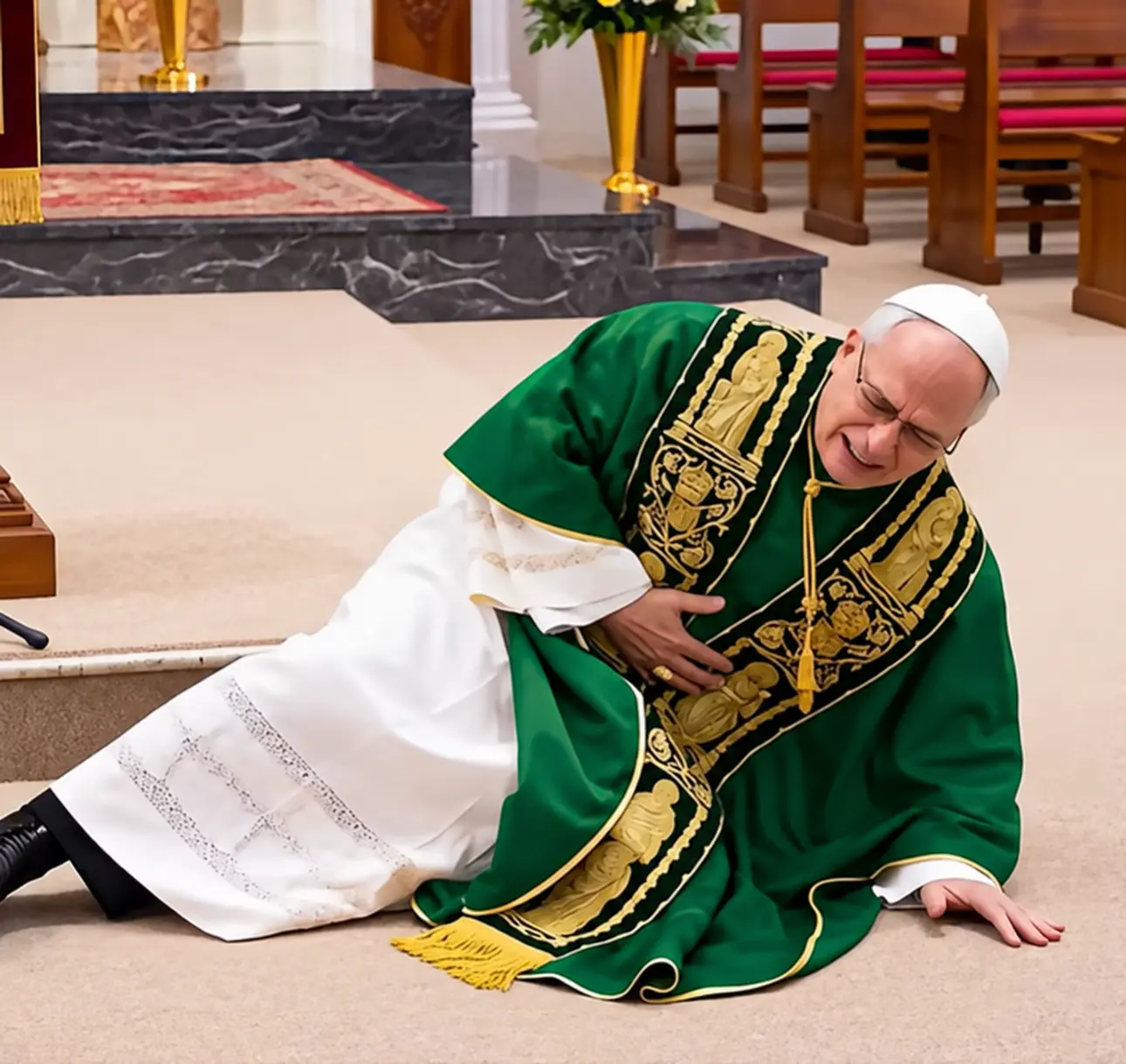
LOURDES, FRANCE — A dramatic claim about Pope Leo XIV and a supposed tense moment inside a Carmelite monastery has raised an unsettling question: Did the pontiff stumble, lose his balance, or experience an unexpected incident during a religious visit?
The headline has all the ingredients of a story capable of attracting worldwide attention.
A revered religious leader.
A sacred destination.
A mysterious moment behind monastery walls.
And an unanswered question about the Pope's physical safety.
Yet one crucial detail remains missing: there is no verified description of the alleged incident in the supplied account.
The claim does not identify a specific Sunday, provide authenticated footage, or establish that Pope Leo XIV visited the monastery on the occasion described.
It also offers no evidence that he stumbled or fell.
The uncertainty makes it essential to distinguish a dramatic headline from an established event.
The Mystery Behind the Lourdes Headline
Lourdes occupies a special place in Catholic religious life.
Located in southwestern France, the town is internationally known for its association with the Marian apparitions reported by Saint Bernadette Soubirous in 1858.
Over generations, Lourdes has become a destination for pilgrims seeking prayer, spiritual renewal, and comfort during difficult circumstances.
For many Catholics, the town symbolizes hope amid suffering.
Its religious significance makes any reported papal visit a subject of natural interest.
A visit by Pope Leo XIV would attract attention from Catholic communities and international news organizations.
But the specific claim circulating about a sudden monastery incident contains several unresolved questions.
Was the Pope actually present at the location?
When did the alleged event take place?
Who witnessed it?
Was there an official Vatican statement?
And does any authenticated video show what supposedly happened?
Without answers, the suggestion that he stumbled or fell remains unsubstantiated.
Inside the Quiet World of a Carmelite Monastery
Carmelite religious communities have a long tradition of contemplative prayer.
Monasteries associated with the order are often characterized by quiet routines, religious observance, and a commitment to spiritual reflection.
Such surroundings stand in sharp contrast to the public ceremonies and large crowds commonly associated with papal appearances.
A visit to a contemplative community could involve prayer, conversation, and moments of silence.
It might also involve movement through narrow corridors, chapels, or other historic spaces.
But none of these general possibilities establishes what happened during the alleged visit.
The dramatic headline encourages readers to imagine a tense scene.
It does not provide the evidence necessary to reconstruct one.
Did Pope Leo XIV Actually Fall?
This is the central question raised by the story.
And based on the supplied information, there is no verified basis for answering yes.
The headline asks whether the Pope stumbled or fell but does not present footage, eyewitness testimony, or an official account demonstrating either event.
That distinction matters.
A question can create the impression that something serious occurred even when the underlying evidence has not been supplied.
For example, a person pausing while walking does not necessarily indicate a medical problem.
Someone receiving assistance on a staircase does not automatically mean they have fallen.
And a short recording, even if authentic, may not establish the reason for a particular movement.
Interpreting such moments requires context.
Without it, speculation about a person's health or physical condition can become misleading.
Why Even a Small Papal Incident Would Attract Attention
The Pope is not only a religious leader.
He is also a major international public figure whose activities are followed by Catholics and non-Catholics around the world.
Public appearances, travel schedules, meetings, and addresses can attract significant coverage.
Consequently, reports about the Pope's safety may generate immediate concern.
For Catholics, such news can carry a deeply personal dimension.
Many view the pontiff as a spiritual father and symbol of continuity within the Church.
An apparent emergency involving him could naturally prompt prayers and expressions of concern.
But that emotional connection also creates a responsibility to avoid circulating unsupported claims.
A misleading account may cause unnecessary anxiety among people who believe a serious event has occurred.
The Power of a Few Unexplained Seconds
One reason stories about alleged falls or stumbles spread quickly is that brief physical movements can be difficult to interpret.
Imagine a hypothetical recording from a historic religious building.
A visitor walks through a doorway.
The camera angle changes.
Someone nearby reaches out a hand.
The visitor pauses briefly before continuing.
Depending on the accompanying headline, viewers might interpret the scene as an accident, an act of courtesy, or an ordinary moment of navigation.
The same images could produce different conclusions.
This hypothetical example does not describe Pope Leo XIV or an actual event at Lourdes.
It illustrates why a few seconds of footage cannot always establish what occurred.
The complete recording, camera perspective, timing, and reliable witness accounts may all be necessary.
Pope Leo XIV and the Weight of Global Attention
Pope Leo XIV, born Robert Francis Prevost, became the head of the Catholic Church in May 2025.
His election marked a historic moment as he became the first pope born in the United States.
Before his election, his religious life included extensive experience in Peru and responsibilities within the Augustinian order.
As pontiff, his role places him at the center of major religious and humanitarian discussions.
The Pope's public activities are therefore closely watched.
An official visit to a pilgrimage destination such as Lourdes would be significant in its own right.
There would be no need to invent a dramatic incident to explain why the visit might matter.
The spiritual importance of the destination and the Pope's interactions with religious communities would already provide substantial subjects for reporting.
Lourdes: A Place Associated With Healing and Hope
Lourdes has long been associated with prayers for people experiencing illness and hardship.
Pilgrims visit its religious sites seeking spiritual consolation.
Some participate in processions, attend Mass, or spend time in private prayer.
The town's history has also made it an important setting for conversations about suffering, faith, and human vulnerability.
These themes can evoke strong emotions.
For people living with serious illness or caring for loved ones, Lourdes may represent a place where their experiences are acknowledged within a religious community.
That significance should not be confused with evidence of an emergency involving the Pope.
The religious symbolism of a location cannot establish the facts of an alleged incident.
What Would Confirm the Story?
A reliable account of the supposed monastery moment would need more than a dramatic description.
An official Vatican itinerary could help establish whether the Pope visited the location.
Contemporaneous reporting from credible journalists could provide details about the event.
An authenticated recording might show whether a stumble or fall occurred.
Statements from people who directly witnessed the incident could also contribute to understanding what happened.
If there were a significant safety incident, an official response might clarify the circumstances.
However, the absence of an immediate public statement would not, by itself, prove that an emergency occurred.
Reliable reporting requires evidence rather than assumptions drawn from silence.
Why Headlines Turn Questions Into Fear
The wording of the original claim deserves attention.
“A sudden moment.”
“An unexpected turn.”
“A tense moment.”
“Critical seconds.”
Each phrase creates anticipation.
Together, they suggest an alarming development.
Yet the headline never clearly states what occurred.
Instead, it asks whether the Pope stumbled or fell.
That construction allows readers to imagine a dramatic event without requiring the writer to describe one.
The effect can be powerful.
People may remember the suggestion of a fall even when the story provides no evidence that a fall happened.
This is one reason precise language matters when discussing a public figure's safety.
The Difference Between Concern and Confirmation
It is entirely reasonable for people to care about the well-being of a religious leader.
Concern becomes problematic only when it is treated as proof of an incident.
A person may read an alarming headline and respond emotionally.
That response does not establish the headline's accuracy.
Similarly, online comments expressing prayers or worry do not independently confirm that something happened.
A responsible account must distinguish what people fear from what evidence demonstrates.
In the case of the alleged Lourdes incident, the available information supports questions about the claim itself, not conclusions about the Pope's condition.
The Vatican's Role in Clarifying Public Events
The Holy See communicates information about papal activities through official channels.
Schedules, speeches, audiences, and major journeys are often documented through Vatican communications.
For an alleged event involving a papal visit, those records would be an important starting point.
The official Vatican News website and the Holy See Press Office provide information that can help establish the circumstances of public papal activities.
Independent reporting can then provide additional context.
Neither an unattributed social media post nor an ambiguous headline should be treated as a substitute for those sources.
A Story That Raises More Questions Than Answers
The supposed Lourdes incident remains unclear because the original claim supplies so little information.
It does not identify a date.
It does not establish the monastery visit.
It does not describe a verified fall.
It does not provide a recording.
And it does not cite an eyewitness or official statement.
Those gaps prevent a factual reconstruction of the alleged event.
They also make dramatic conclusions inappropriate.
There is no responsible basis for claiming that Pope Leo XIV was injured, required medical assistance, or experienced a health emergency.
Such assertions would require independent evidence.
What Readers Should Take Away
A papal visit to Lourdes would be meaningful because of the town's importance in Catholic life.
An authentic safety incident involving the pontiff would also deserve careful, accurate coverage.
But those are two different subjects.
The first concerns a religious event.
The second concerns an alleged occurrence that must be verified.
The headline combines them without providing the information necessary to establish either the supposed visit or the alleged stumble.
That does not make the questions illegitimate.
It makes the answers uncertain.
The Truth Behind the Dramatic Lourdes Claim
For now, the most important detail is the one the headline fails to provide.
What actually happened?
Without an authenticated account, there is no verified basis for describing a fall, a medical emergency, or a tense incident involving Pope Leo XIV inside the Carmelite monastery.
The real story is not a confirmed accident at Lourdes. It is an alarming claim that remains unsupported by the details supplied.
And when the subject is the safety of a major religious leader, accuracy matters more than suspense.
Because concern deserves reliable information — not fear created by an unanswered headline.
Related Photos

Pope Leo XIV during a public appearance at the Vatican.