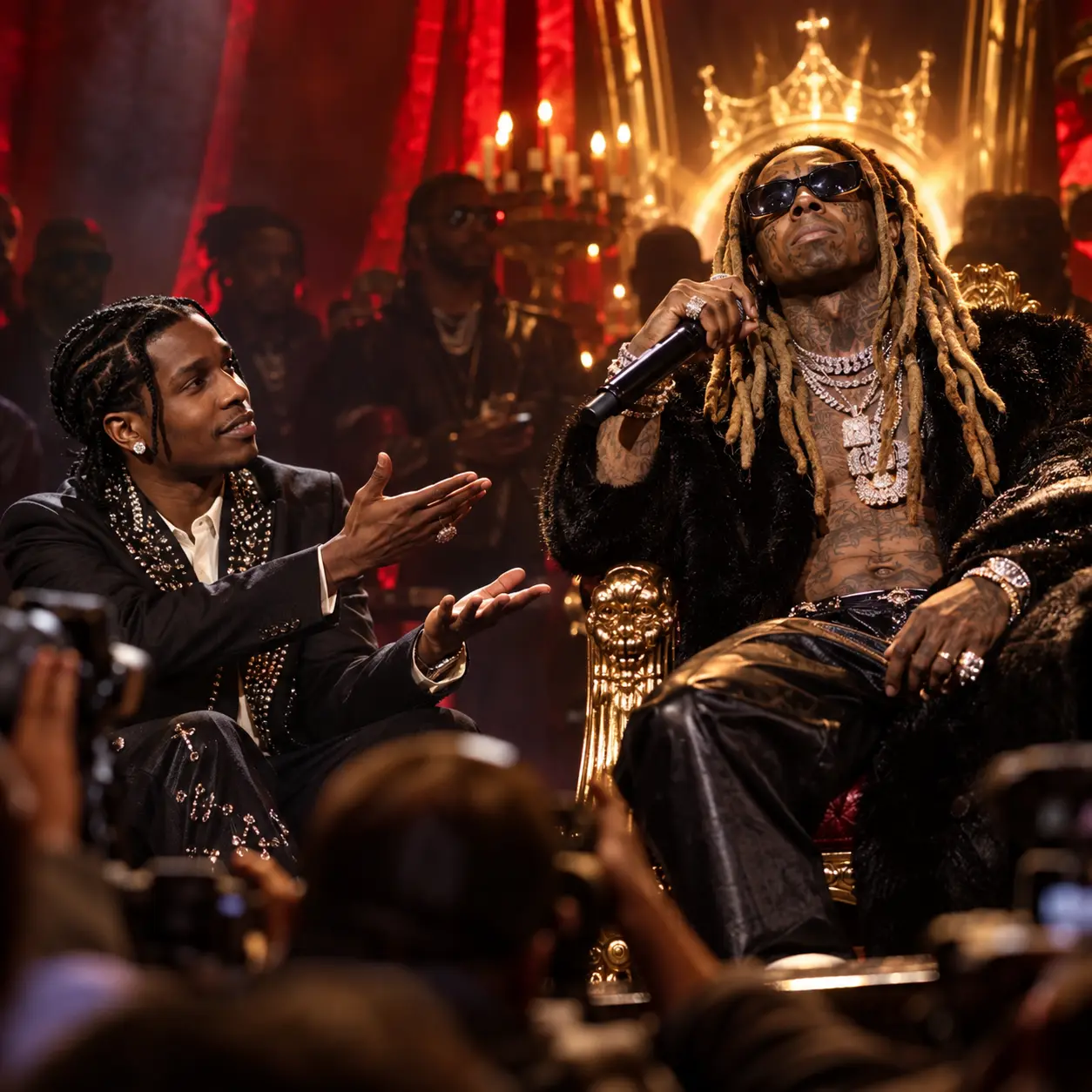
A$AP Rocky's admiration for Lil Wayne has brought one of hip-hop's most enduring arguments back into focus: who truly deserves recognition as the greatest rapper to ever touch a microphone?
The discussion centers on Wayne's extraordinary lyrical ability, unpredictable delivery, and lasting cultural influence, qualities that have made him a formidable figure in rap music for more than two decades.
Rocky's reported praise reflects a sentiment shared by countless artists who grew up studying Wayne's music, although the exact wording and circumstances of Rocky's comments have not been independently established.Những tin tức giật gân có thể viết fake news tăng click bait về nhân vật Lil Wayne
For longtime hip-hop followers, the suggestion that Wayne belongs at the very top is hardly surprising. His career represents a remarkable combination of commercial success, artistic experimentation, and lyrical endurance.
But the bigger question extends beyond admiration. Can any rapper genuinely claim to be unbeatable when hip-hop history includes so many extraordinary lyricists, influential innovators, and unforgettable competitive performances?

That question has followed Wayne throughout his career, particularly as successive generations of artists have acknowledged his influence while developing their own approaches to rhyme schemes, storytelling, and musical expression.
Born Dwayne Michael Carter Jr. in New Orleans, Louisiana, Lil Wayne began building his reputation at an age when most aspiring musicians were still discovering their voices and developing their artistic identities.
His early association with Cash Money Records introduced him to a demanding musical environment where confidence, originality, and relentless productivity were essential ingredients for establishing credibility within an increasingly competitive industry.
As a member of the Hot Boys, Wayne demonstrated an unmistakable presence alongside talented collaborators, gradually developing the distinctive vocal delivery and adventurous lyrical approach that would eventually define his solo career.
However, his transformation from promising young performer into internationally recognized rap superstar did not happen overnight. It required years of experimentation, strategic releases, and an extraordinary commitment to recording music.
His breakthrough into rap's highest commercial tier was supported by increasingly ambitious projects, but his reputation among devoted listeners grew just as significantly through his legendary series of mixtape releases.
Those recordings became essential listening for fans who appreciated technical lyricism, surprising metaphors, unconventional flows, and an artist seemingly capable of transforming almost any instrumental into his personal creative playground.
The Dedication and Da Drought mixtape series helped establish Wayne as a rapper whose competitive instincts extended beyond traditional albums, allowing him to showcase his abilities with remarkable freedom and consistency.
During that period, Wayne frequently approached familiar instrumentals with an entirely different perspective, demonstrating how inventive wordplay and unpredictable rhythmic choices could transform songs audiences already knew extremely well.
This ability became central to his mythology. Listeners were not simply hearing another rapper perform over a popular beat; they were experiencing someone determined to reinvent the music itself.
For many hip-hop enthusiasts, Wayne's greatest strength has always been his willingness to take lyrical risks, experimenting with unusual comparisons and unexpected punchlines that other artists might never attempt.
His verses frequently combine humor, confidence, aggression, and surreal imagery, creating a recognizable style that has inspired countless younger musicians seeking to establish their own identities within the genre.
Unlike rappers who primarily emphasize narrative storytelling, Wayne often builds his performances around individual lines, stacking inventive phrases until the accumulation becomes an extraordinary demonstration of verbal imagination and technical control.
That approach does not necessarily make him superior to every other artist, but it explains why his supporters frequently describe him as one of hip-hop's most naturally gifted lyrical performers.
A$AP Rocky's appreciation carries particular significance because his own career emerged during an era when Wayne's influence was already deeply embedded in the musical language of an entire generation of rappers.
Rocky developed his reputation through a distinctive combination of Harlem identity, Southern musical influences, experimental production, and fashion-forward presentation, demonstrating that modern hip-hop could embrace multiple traditions simultaneously and successfully.
His breakthrough mixtape, Live.Love.A$AP, introduced listeners to an atmospheric sound that blended regional influences with an unmistakably contemporary perspective, helping establish Rocky as an important voice in his generation.
Although Rocky and Wayne possess noticeably different artistic identities, both have challenged expectations about what successful rappers should sound like, look like, and represent within the broader entertainment industry.
Wayne helped normalize a more unconventional image of rap stardom, while Rocky further expanded the relationship between hip-hop, high fashion, visual experimentation, and a willingness to challenge traditional boundaries.
Their respective careers illustrate how influence can operate beyond direct musical imitation. An artist may inspire another through confidence, creative freedom, or the determination to establish an unmistakably individual identity.
That broader understanding of influence is essential when considering Wayne's legacy, because his impact cannot be measured exclusively through record sales, chart positions, or the number of awards he has received.
His distinctive vocal techniques, melodic experimentation, and expressive delivery helped create opportunities for later generations of artists who would combine traditional rapping with increasingly flexible approaches to melody and emotion.
Figures including Drake and Nicki Minaj became major stars through Young Money Entertainment, extending Wayne's influence beyond his own recordings and demonstrating his importance in developing new generations of commercial talent.
Wayne's role in helping elevate those performers remains a significant part of his professional legacy, particularly because both artists subsequently became influential figures in their own right across the global music industry.
Yet his supporters often argue that his greatest achievement remains something simpler: the ability to deliver a memorable verse under almost any circumstances, regardless of production style or featured collaborators.
Throughout his career, Wayne has appeared alongside numerous prominent musicians, bringing an instantly recognizable energy to recordings that span mainstream hip-hop, contemporary R&B, pop music, and other musical traditions.
His versatility has strengthened the perception that he can adapt to virtually any musical environment, although adaptability and technical superiority remain different qualities when evaluating the greatest rappers in history.
The legendary Tha Carter album series provides another important foundation for Wayne's reputation, documenting his evolution from a promising young performer into one of the defining personalities of modern hip-hop.
Tha Carter III, released in 2008, became a particularly significant milestone, achieving enormous commercial success while introducing some of Wayne's most recognizable recordings to audiences far beyond dedicated rap circles.
The album demonstrated that his unusual lyrical style could connect with mainstream listeners without abandoning the eccentricity and confidence that had made his earlier mixtapes so influential among hip-hop enthusiasts.
Songs such as A Milli showcased Wayne's ability to command attention through rhythmic precision, unconventional phrasing, and a relentless succession of memorable lines delivered with unmistakable personality and remarkable self-assurance.
Meanwhile, Lollipop illustrated his willingness to experiment with melody and production, showing that artistic versatility could coexist with the aggressive lyrical performances that originally established his formidable competitive reputation.
This combination of commercial accessibility and technical ambition remains one reason Wayne occupies such an unusual position within discussions about hip-hop greatness, especially among listeners who value multiple artistic qualities.
But declaring any rapper unbeatable immediately introduces difficult questions about how lyrical competition should be judged, because different generations have developed different standards for measuring excellence within the genre.
Some listeners prioritize intricate rhyme schemes and complex vocabulary, while others value storytelling, emotional authenticity, originality, cultural influence, improvisational skill, or the ability to create timeless and meaningful records.
Under one interpretation, Wayne's inventive punchlines and astonishing productivity place him near the top. Under another, artists known for narrative depth or tightly structured lyricism might receive greater recognition.
Nas, for example, has earned widespread admiration for his vivid storytelling and sophisticated observations, qualities that helped make Illmatic one of the most celebrated albums in hip-hop history.
Jay-Z represents another formidable contender, combining conversational precision, memorable wordplay, commercial longevity, and cultural influence across a career that has consistently shaped conversations about rap excellence and artistic achievement.
Eminem's supporters frequently emphasize his intricate multisyllabic rhyme patterns, technical control, and verbal agility, arguing that his distinctive approach makes him exceptionally difficult to challenge in purely lyrical competition.
Kendrick Lamar offers another compelling perspective, blending conceptual ambition, layered storytelling, social commentary, and technical sophistication into albums that have earned both critical recognition and extraordinary cultural significance.
Artists such as Black Thought, André 3000, Rakim, and Ghostface Killah also remain central to serious discussions about lyrical excellence, each representing different strengths and traditions within hip-hop's extensive history.
Consequently, the question of whether Wayne could defeat every competitor in a lyrical confrontation depends heavily on what listeners expect from such a contest and which performances they consider decisive.
A battle focused on spontaneous punchlines might favor one performer, while a competition emphasizing elaborate storytelling, complex internal rhymes, or emotional depth could produce an entirely different assessment of lyrical superiority.
Wayne's strongest advocates often point toward his extraordinary ability to generate unexpected lines, arguing that his imagination gives him an advantage that cannot easily be reproduced through technical preparation alone.
They also emphasize his enormous catalog, suggesting that maintaining a recognizable identity across so many recordings demonstrates creative endurance that relatively few successful rappers have managed to sustain over time.
Critics of the unbeatable label, however, might reasonably question whether productivity always translates into consistency, or whether Wayne's most experimental verses occasionally prioritize cleverness over clarity and thematic development.
These disagreements are not necessarily criticisms of Wayne himself. Instead, they demonstrate the difficulty of comparing musicians whose artistic objectives, historical circumstances, and individual strengths can differ so dramatically.
Hip-hop has always celebrated competition, but its most productive debates recognize that rivalry and respect can coexist, allowing listeners to appreciate different approaches without reducing every discussion to winners and losers.
That principle is especially relevant when established performers acknowledge artists who influenced them, because such recognition helps preserve the connections between generations that have continually transformed rap music since its beginnings.
Rocky's admiration for Wayne fits naturally within that tradition, highlighting the importance of recognizing creative predecessors while leaving room for younger artists to establish their own musical contributions and distinctive perspectives.
The relationship between influence and originality can sometimes appear contradictory. Artists must learn from those who came before them while also developing enough independence to avoid becoming imitations of their inspirations.
Wayne's career provides an example of that balance, as he absorbed earlier hip-hop traditions while introducing an increasingly unconventional delivery that would later influence countless performers across multiple musical styles.
His legacy also demonstrates that technical lyricism and mainstream popularity do not have to exist separately, even when audiences sometimes treat commercial success and artistic credibility as competing priorities.
At various stages, Wayne has occupied both worlds, earning respect from dedicated rap enthusiasts while producing recordings that reached enormous audiences through radio, streaming platforms, and popular cultural exposure.
That crossover achievement makes his reputation especially fascinating, because relatively few rappers have maintained such strong associations with both competitive lyricism and the broader commercial machinery of popular entertainment.
Nevertheless, the passage of time has inevitably changed the conversation surrounding Wayne, transforming him from a rebellious young star into an established veteran whose work continues to influence contemporary musical culture.
For younger listeners discovering his earlier recordings, the experience can provide valuable context for understanding techniques and stylistic choices that have become commonplace in modern hip-hop over the following decades.
For longtime supporters, revisiting those recordings often reinforces their belief that Wayne's most inventive performances remain competitive with the strongest lyrical achievements of artists who emerged before or after him.
The debate also reflects a broader cultural tendency to search for definitive rankings, even when artistic greatness cannot be reduced to a single statistic, formula, or universally accepted evaluation system.
Record sales may demonstrate popularity, awards may reflect institutional recognition, and technical analysis may reveal impressive musical skills, but none independently establishes an uncontested greatest rapper of all time.
Ultimately, Wayne's strongest argument may not require proving that every other rapper would lose against him. His extraordinary influence already establishes his importance within the history of the genre itself.
From his early Cash Money recordings to his celebrated mixtapes and major studio albums, Wayne has repeatedly demonstrated an ability to evolve while preserving the recognizable characteristics of his artistic identity.
That consistency has helped sustain his relevance across changing musical landscapes, including periods when hip-hop production, distribution, fashion, and audience expectations underwent substantial transformations driven by technological and cultural developments.
For Rocky, expressing admiration for an influential predecessor also reinforces an important principle within hip-hop: recognizing greatness in another performer does not diminish one's own achievements, creativity, or professional standing.
Indeed, public expressions of artistic respect can introduce younger audiences to foundational recordings, encouraging them to explore the musicians, albums, and historical developments that shaped the music they enjoy today.
Whether listeners ultimately rank Wayne above Nas, Jay-Z, Eminem, Kendrick Lamar, or another legendary performer, his contributions deserve serious consideration rather than dismissal based solely on personal preference or generational loyalty.
The most interesting aspect of this discussion may therefore be the diversity of answers it produces, revealing how individual experiences shape what people consider impressive, meaningful, or unforgettable in rap.
Some fans will always prefer Wayne's explosive metaphors and unconventional delivery, while others will champion the intricate storytelling, technical discipline, or cultural commentary associated with their own favorite performers.
Neither position automatically invalidates the other, because music is experienced through personal history, emotional connection, cultural identity, and the countless memories listeners associate with particular songs and individual artists.
What remains undeniable is that Lil Wayne helped reshape modern hip-hop, establishing creative possibilities that continue to influence artists who may never have experienced the earliest stages of his remarkable career.

His reputation rests not simply on confidence or celebrity endorsements, but on a substantial body of recordings that continues to inspire debate, admiration, criticism, and renewed appreciation among successive generations.
A$AP Rocky's reported praise provides another opportunity to examine that legacy, even though the precise remarks attributed to him should be verified before being presented as a confirmed direct quotation.
For Wayne's most devoted supporters, the conclusion may already seem obvious: few artists can match his creativity, distinctive voice, extraordinary catalog, and willingness to approach every verse with fearless imagination.
For those who disagree, the conversation remains equally valuable, offering an opportunity to celebrate other extraordinary rappers whose achievements have helped make hip-hop one of the world's most influential genres.
And perhaps that is the greatest tribute Wayne could receive: not universal agreement that he stands above everyone else, but continued recognition that his name belongs in the conversation about greatness.
The ultimate question remains open: Is Lil Wayne truly the most unstoppable lyricist hip-hop has ever produced, or does another legendary rapper deserve the crown when the competition becomes strictly bar for bar?
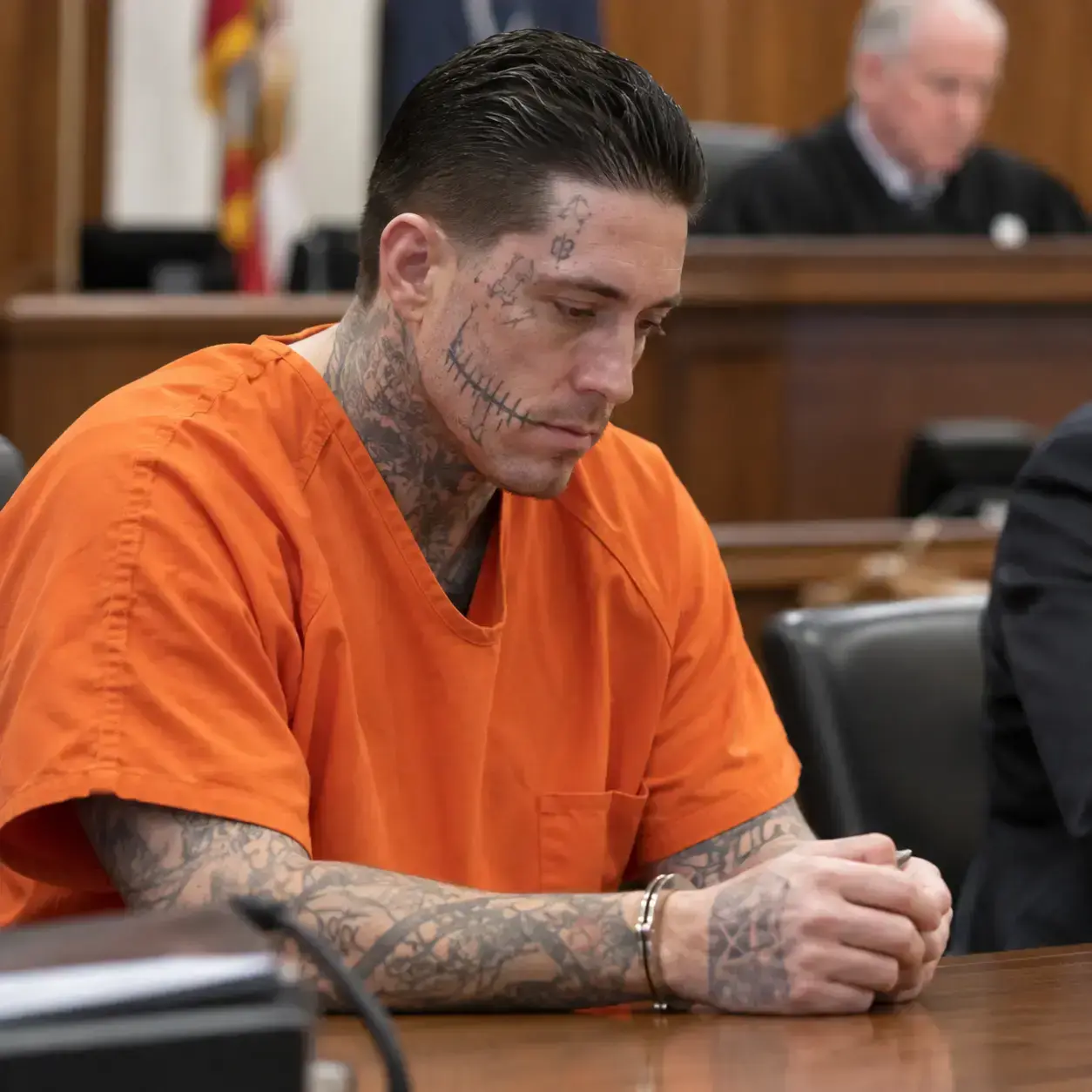
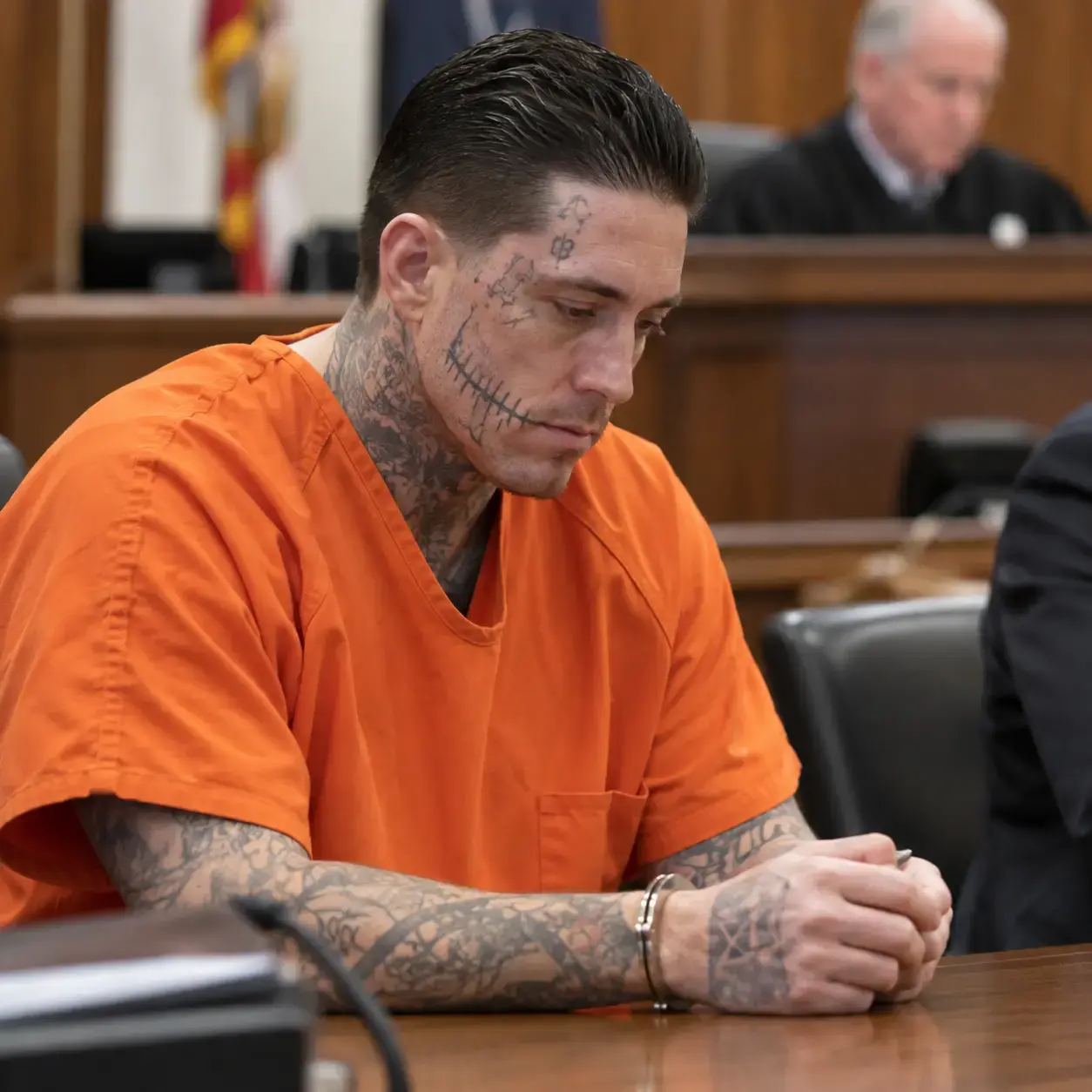
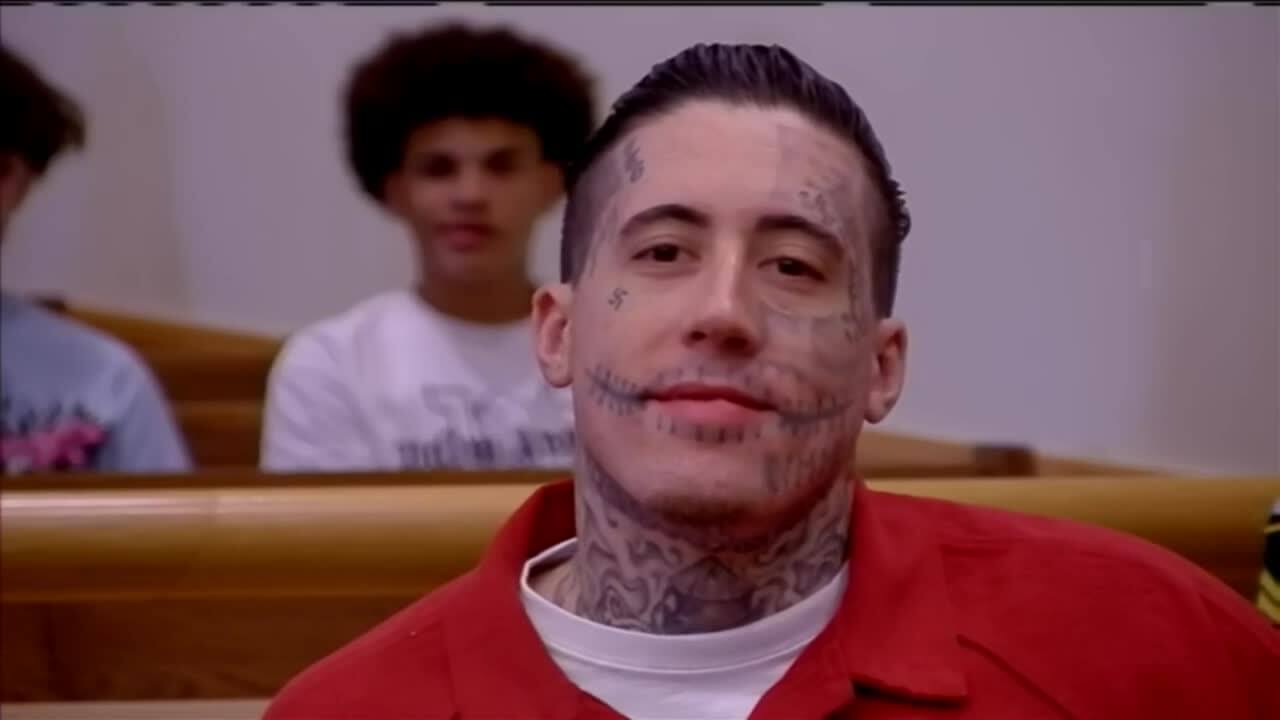 Perhaps the most surprising aspect of the online conversation is the sympathy some individuals continue to express toward Wilson. Their reactions have prompted debate about why people sometimes feel compassion for individuals whose actions have caused profound suffering to others.Sympathy, however, does not necessarily mean approval. People may feel concern for another person's humanity while firmly condemning their actions. Understanding this distinction is essential when examining the emotional responses that emerge around controversial criminal cases.